


What's Actually in Your Spray Bottle? 6 Toxic Ingredients to Avoid
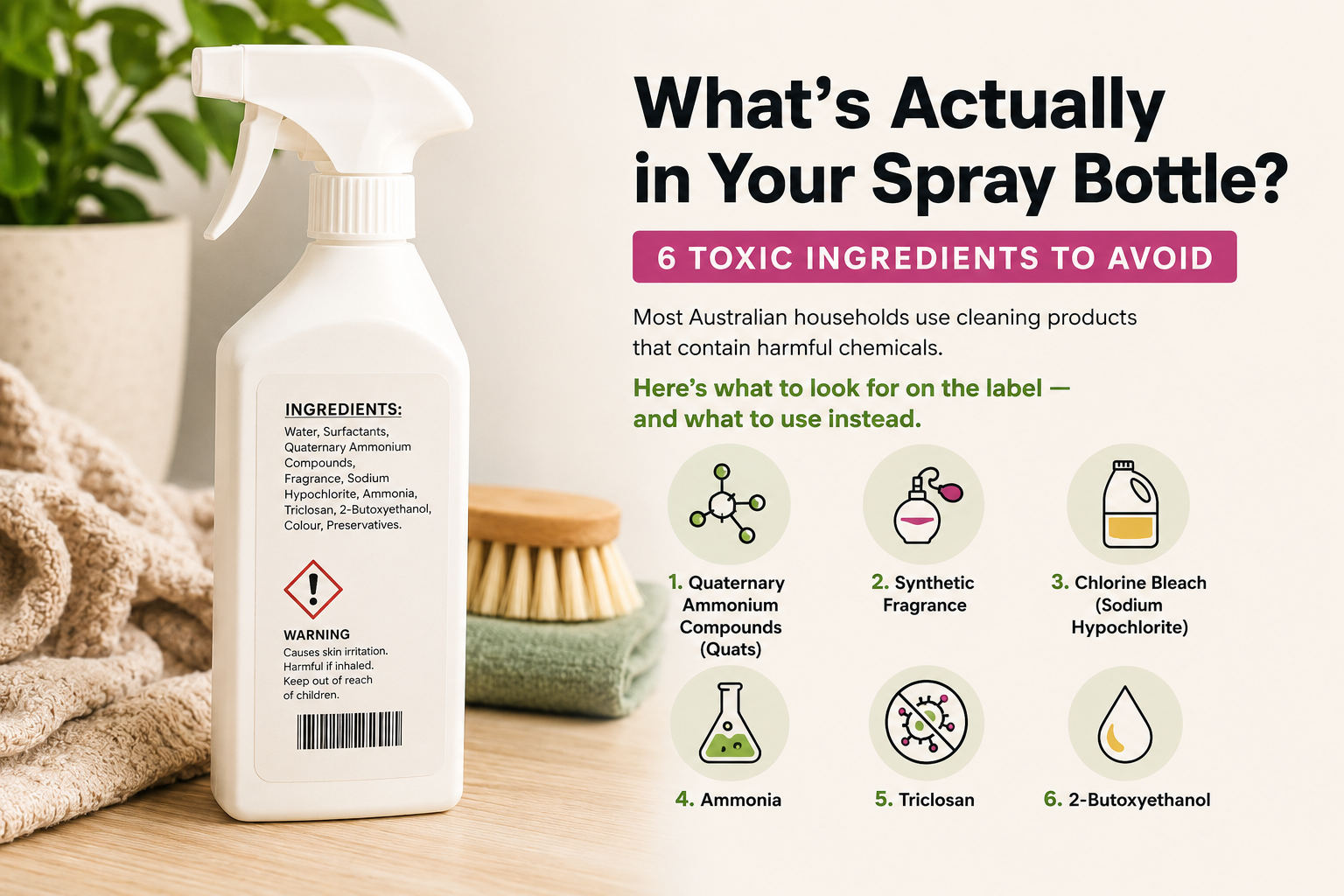
Grab the cleaning spray from under your sink right now. Turn it around. Can you read every ingredient on the label?
Most people can't. And that's not an accident.
Conventional cleaning products are some of the least regulated items in Australian homes. While the food you eat and the skincare you use are subject to strict ingredient disclosure laws, cleaning products have far less oversight. Manufacturers can use vague terms like "surfactants" or "fragrance" to hide dozens of individual chemicals behind one word.
If you have kids crawling on your floors, pets licking your benches or asthma in your household, this matters.
Here are six of the most common harmful ingredients hiding in your everyday cleaning products.
1. Quaternary Ammonium Compounds (Quats)
Found in: disinfectant sprays, antibacterial cleaners, fabric softeners
Quats are one of the most widely used preservatives and disinfectants in household cleaning products. They're effective at killing bacteria, but they come with a cost. Regular exposure has been linked to respiratory irritation, skin sensitisation and in some studies, reproductive harm.
The problem is that quats don't rinse away easily. They linger on surfaces long after you've finished cleaning, meaning your family is in contact with them throughout the day.
2. Synthetic Fragrance
Found in: almost everything
The word "fragrance" or "parfum" on a label can represent a cocktail of up to 3,000 individual chemicals, none of which need to be individually disclosed. Many synthetic fragrances contain phthalates, which are hormone disruptors, and VOCs (volatile organic compounds) that contribute to indoor air pollution.
If anyone in your household suffers from headaches, allergies or asthma that seems to flare up indoors, synthetic fragrance is often the culprit.
3. Chlorine Bleach (Sodium Hypochlorite)
Found in: bathroom cleaners, mould sprays, disinfectants
Bleach is effective. Nobody disputes that. But the fumes it releases, particularly in poorly ventilated spaces like bathrooms, can irritate the lungs, eyes and throat. Mixed accidentally with ammonia-based products (which is easier than you'd think), it produces toxic chloramine gas.
For everyday household cleaning, the level of disinfection bleach provides is far beyond what's necessary, and the chemical cost isn't worth it.
4. Ammonia
Found in: glass cleaners, multi-purpose sprays, floor cleaners
Ammonia is what gives glass cleaners their streak-free results, but it's also a respiratory irritant that can trigger asthma attacks and cause eye and skin irritation with regular exposure. People with chronic respiratory conditions are particularly vulnerable.
5. Triclosan
Found in: antibacterial soaps, some cleaning sprays
Triclosan is a synthetic antibacterial agent that has been linked to hormone disruption and antibiotic resistance. It's been banned from hand soaps in the United States, but it still appears in some Australian cleaning products.
6. 2-Butoxyethanol
Found in: multi-purpose cleaners, window sprays
This solvent gives cleaners their ability to cut through grease, but it's also absorbed through the skin and can cause headaches, nausea and liver and kidney damage with prolonged exposure. It's rarely listed clearly on labels, often hiding under the catch-all term "surfactants."
So What's the Alternative?
Low tox cleaning doesn't mean sacrificing results. It means choosing products that clean effectively using ingredients you can actually pronounce.
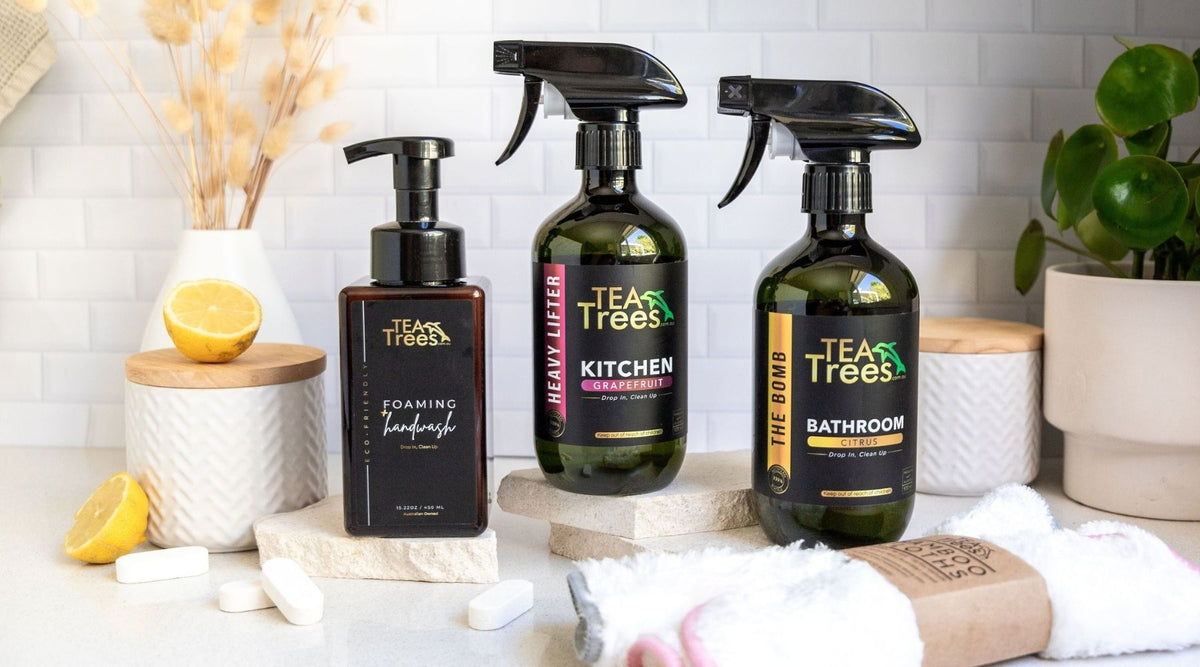
Tea Trees cleaning tablets are formulated without quats, synthetic fragrance, bleach, ammonia, triclosan or 2-butoxyethanol. Every ingredient list is published on every product page, because we believe you should know exactly what you're cleaning with.
One tablet. One reusable bottle. Just add water.
Shop The Bomb Bathroom Cleaner
Shop The General Multi-Purpose Cleaner
Shop the Full Housewarming Bundle
Are eco cleaning products as effective as conventional cleaners? Yes. Modern low tox formulas use plant-based surfactants and natural acids that are highly effective at cutting through grease, soap scum and everyday grime, without the harsh chemicals. Tea Trees customers consistently report that our products outperform their previous conventional cleaners.
What does low tox mean? Low tox refers to products formulated to minimise exposure to harsh synthetic chemicals. It doesn't necessarily mean completely chemical free, all cleaning products use some form of chemistry, but it means choosing formulas that are safer for people, pets and the environment.
Are cleaning tablets safe for kids and pets? Tea Trees cleaning tablets are formulated to be low tox and safe around kids and pets. Always store cleaning products out of reach of children regardless of formula.
How do I know which ingredients to avoid? Look for the six ingredients listed above. Also avoid products that list "parfum" without further disclosure, and anything that doesn't publish a full ingredient list.
Comments